
For as long as I can remember, space has been a source of fascination for me.
The scale of space is extreme, in the observable universe there is an estimated 2 trillion galaxies. The planet we live on is tiny in comparison to the vastness of the universe we exist in.
My favourite representation of this is ‘The Day the Earth Smiled’ the photo of Earth taken by the Cassini probe as a call for the people of the world to reflect on their place in the universe. But it also provided a memorial to the late Carl Sagan who was intimately involved in the inspirational photo the “Pale Blue Dot” - The last photo that Voyager 1 on its mission out of the solar system took, whilst it was 6 billion kilometres away and had just 34 minutes before it cameras turned off.


The Day the Earth Smiled depicts Earth a billion miles away during an eclipse of the sun. That tiny pale blue dot is all that you will likely ever know.
I remember seeing an interview with Olivia Rodrigo, the pop singer, in which she said that on dates she “always ask[s] them if they would want to go to space … If they say yes, I don’t date them,” Rodrigo explained. “I just think if you want to go to space, you’re a little too full of yourself.” Aside from the obvious point - a pop star calling people self-centred - it’s a vein of humanity that is small-minded and insular to me.
From a species that landed men on the Moon to a species that sees that Faustian desire for exploration and knowledge as a waste of time and resources.
Now of course it is likely that she is making a political point against the Elon Musks and Richard Bransons of the world, who in their view are corrupting space travel with ego.
Aside from the fact that without SpaceX space travel would be significantly more difficult and the probability of going to Mars negligible, I would think every person would want to go to space.
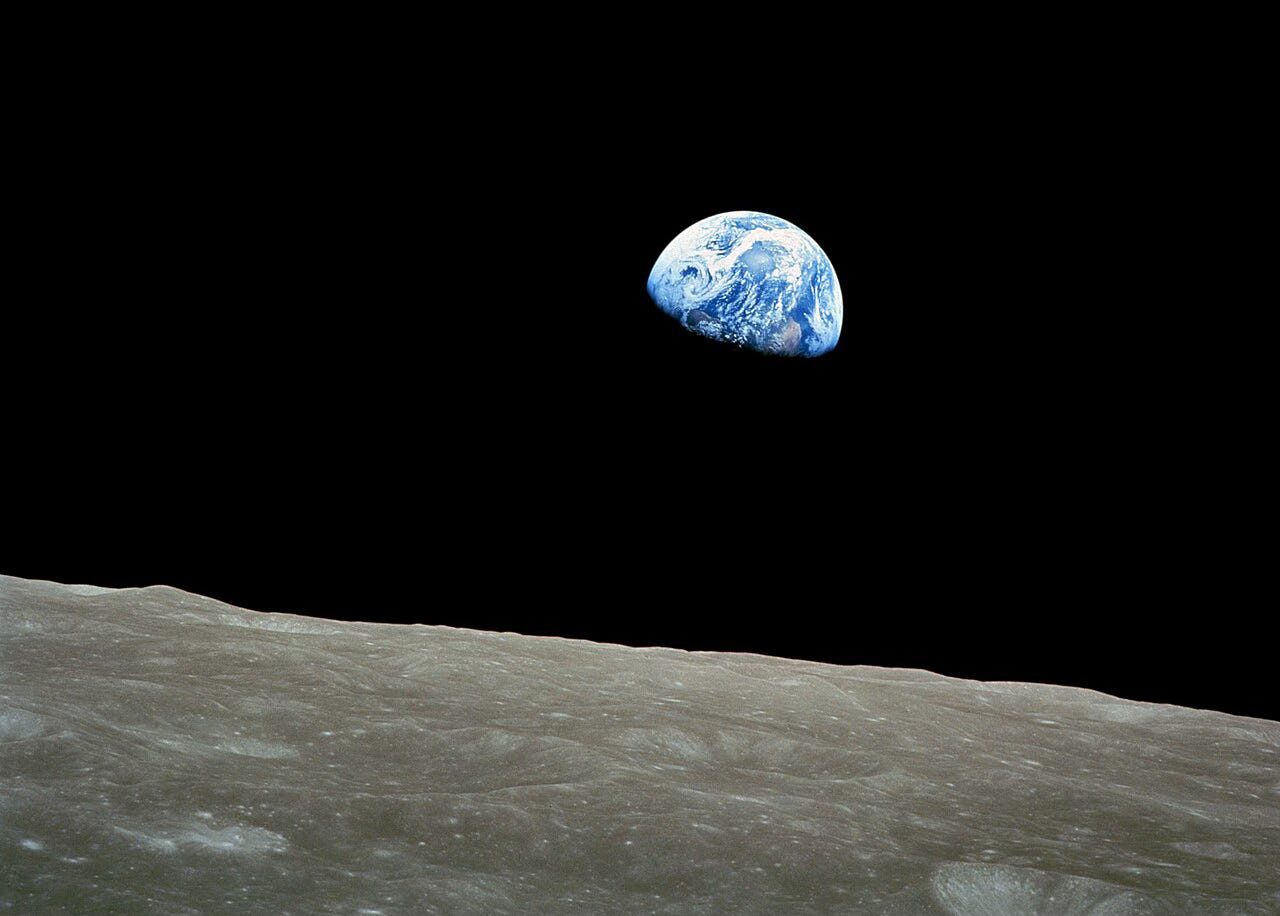
Astronauts after going to space experience what psychologists have dubbed the overview effect.
The overview effect is a cognitive shift in awareness of the fragility of our planet. It is the experience of seeing firsthand the reality of Earth in space, which is immediately understood to be a tiny, fragile ball of life, “hanging in the void”, shielded and nourished by a paper-thin atmosphere.
“The thing that really surprised me was that it [Earth] projected an air of fragility. And why, I don’t know. I don’t know to this day. I had a feeling it’s tiny, it’s shiny, it’s beautiful, it’s home, and it’s fragile”.— Michael Collins, Apollo 11
Ed Dwight, sixty years after his controversial exclusion from the Von Braun NASA astronaut programme for being African American, finally got to experience spaceflight onboard Blue Origin at the age of 90. He reflected after his experience: “Out the window, I could see the Earth. Everything looked ordered and neat and wonderful and beautiful. There was no separation between countries or states. And you ask yourself: As wonderful as it all is, why can’t the people who live on it get along? Why don’t they want to take care of such a beautiful place?”
William Shatner, after his experience on an earlier flight, said immediately after landing: “Everybody in the world needs to do this. ... The covering of blue was... the sheet, this blanket, this comforter of blue that we have around us... And then suddenly you shoot through it... as though you whip off a sheet off you when you’re asleep, and you’re looking into blackness, into black ugliness, and you look down. There’s the blue down there, and the black up there and it’s... There is mother, and Earth, and comfort. And there is—is there death? I don’t know. It was so moving to me. This experience, it’s something unbelievable.”
To me, I don’t quite understand how someone could not want this experience because Mankind was born to inhert the stars.
But it is important that we have boundaries, and Miss Rodrigo’s happens to be the troposphere.