
One of the key takeaways from my trip to Finland was the threat they felt from Russia. Finland is situated on the Baltic Sea and shares a 1,340km border with Russia. They have their own parallel history, having fought the Winter War and Continuation War at the same time the Allies were fighting WWII. To them, the Russian threat is palpable and in recent memory.
The threat is only getting worse. Because of the geography, the Russians are constantly using the Gulf of Finland (pictured below) to export their oil through the baltic sea.
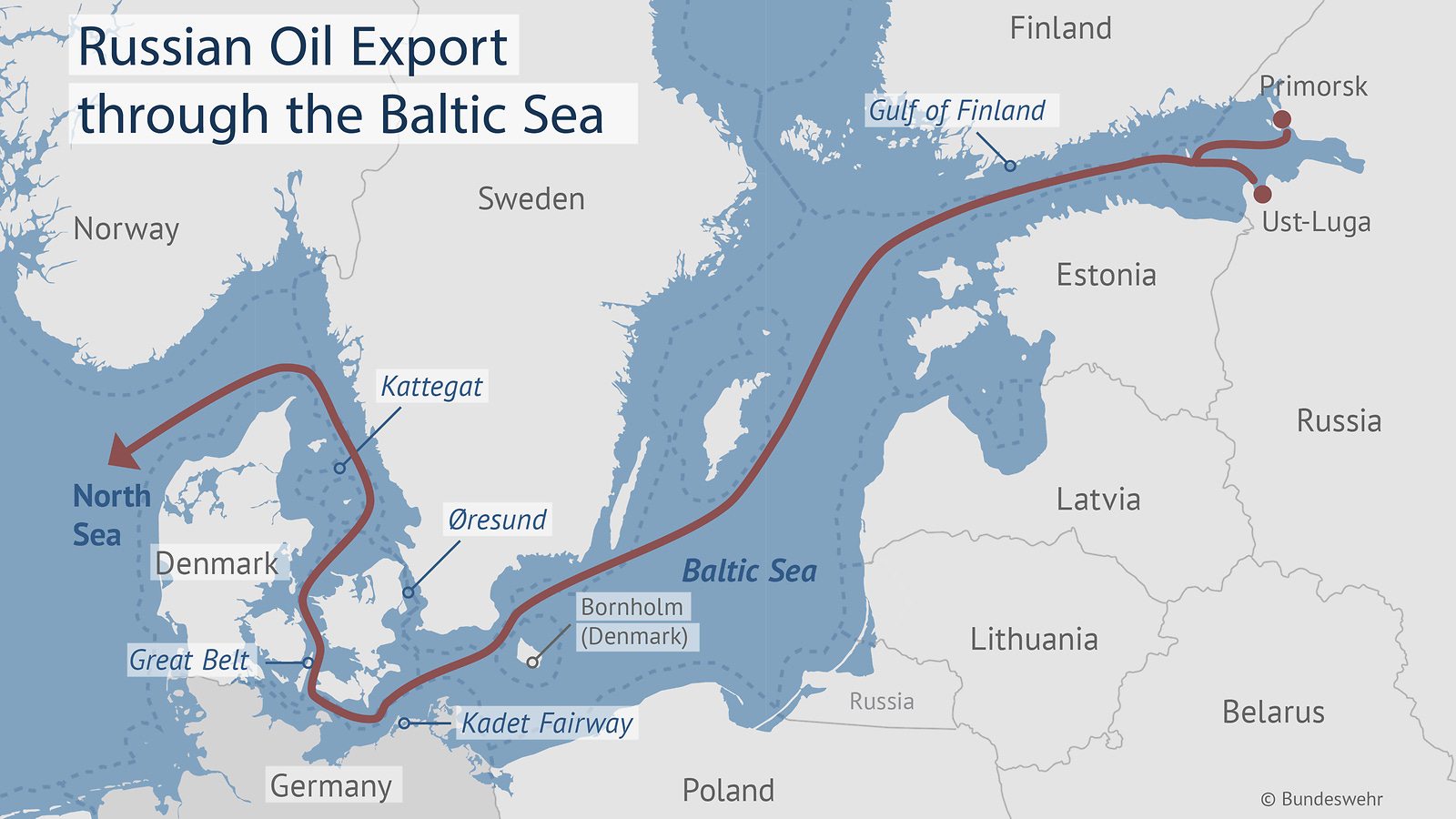
There exists a narrow band of international water in the Gulf of Finland that allows the Russian shadow fleet to sneak past the coasts of Finland and Estonia. This was of key concern for the Finns during my visit.
Whilst post-sanctions Russian oil was supposedly curbed in production, the reality is that they are operating at 95% of their pre-war capacity. The export of oil is, however, no longer done by Russian ships, but rather vessels flying under the flags of countries such as Liberia or the Marshall Islands.
This is providing serious funding for the Russian war effort and has been a key target for the Ukrainian secret service, as seen by their drone attack in September 2025 on the Primorsk oil port.
The threat for the Finnish is the lack of insurance and unclear ownership regarding the ships. This could result in financial burdens for the coastal states, as it would be difficult for claimants to recover costs for damage, oil spills, and rescue operations if it is unclear whom to turn to. The condition of the ships is poor, with many being old, lacking regular repairs, and as a result uninsurable.
Additionally, there are allegations of the shadow fleet being used to carry out nefarious activities — known as hybrid warfare — for example, the tanker Eagle S (below), which in 2024 dragged its anchor along the seafloor for 100km’s causing damage to the underwater power cables between Estonia and Finland. The Finnish authorities charged 3 of the crew for damaging the cables but the case was dropped because the courts didn’t have jurisdiction over the case.
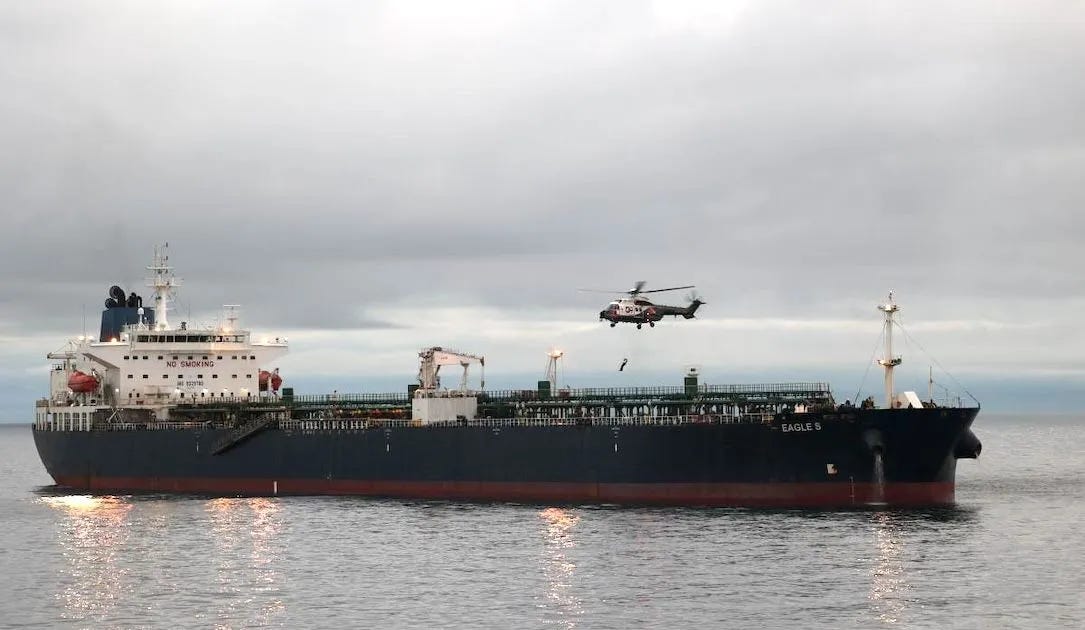
This is because under the United Nations Convention on the Law of the Sea (UNCLOS) the criminal jurisdiction lies with the vessel’s flag state, in this case, the Cook Islands, or the crew’s home countries - Georgia and India.
This same incident just happened at the end of 2025 when the cargo vessel Fitburg, sailing from St Petersburg to the port of Haifa in Israel under the flag of St Vincent and the Grenadines, dragged its anchor across the sea floor for at least 10 km’s damaging a Finnish telecoms cable. All 14 of the crew were detained and two are charged under “aggravated disruption of telecommunications” and “aggravated sabotage and attempted aggravated sabotage”.
This is a serious effort by the Russians using hybrid warfare to foster instability amongst Western countries. Russian aggression is only increasing against the Baltic Sea countries. But there is concern amongst the Baltic countries that any attempt to shut down the channel would result in reciprocal measures against their shipping companies — particularly amongst the Danes, where Maersk is based.
The response against this Russian aggression has come in the form of NATO and EU cooperation. In January 2025, NATO launched Baltic Sentry, which is a mission specifically focused on surveilling ships in the Baltic Sea, but it isn’t focused on stopping the Russian shadow fleet.
However, Russia with little pushback by the Europeans have only grown more bold in their hybrid activities and failure by the West to shutdown its shipping activities is only sustaining a vital revenue stream for the Russian war effort in Ukraine.